
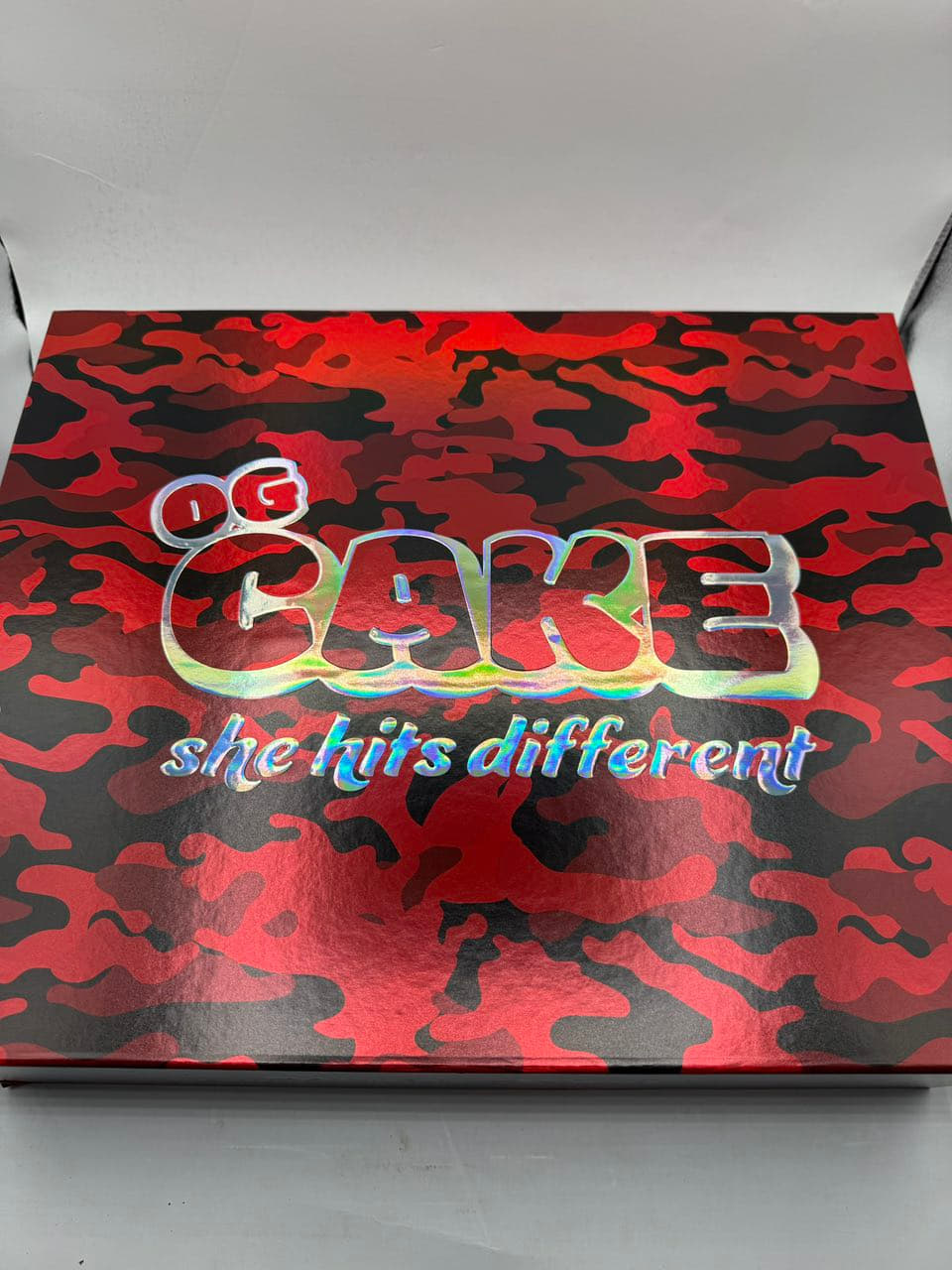
OG Cake Red Camo 2G Disposable
Product Overview
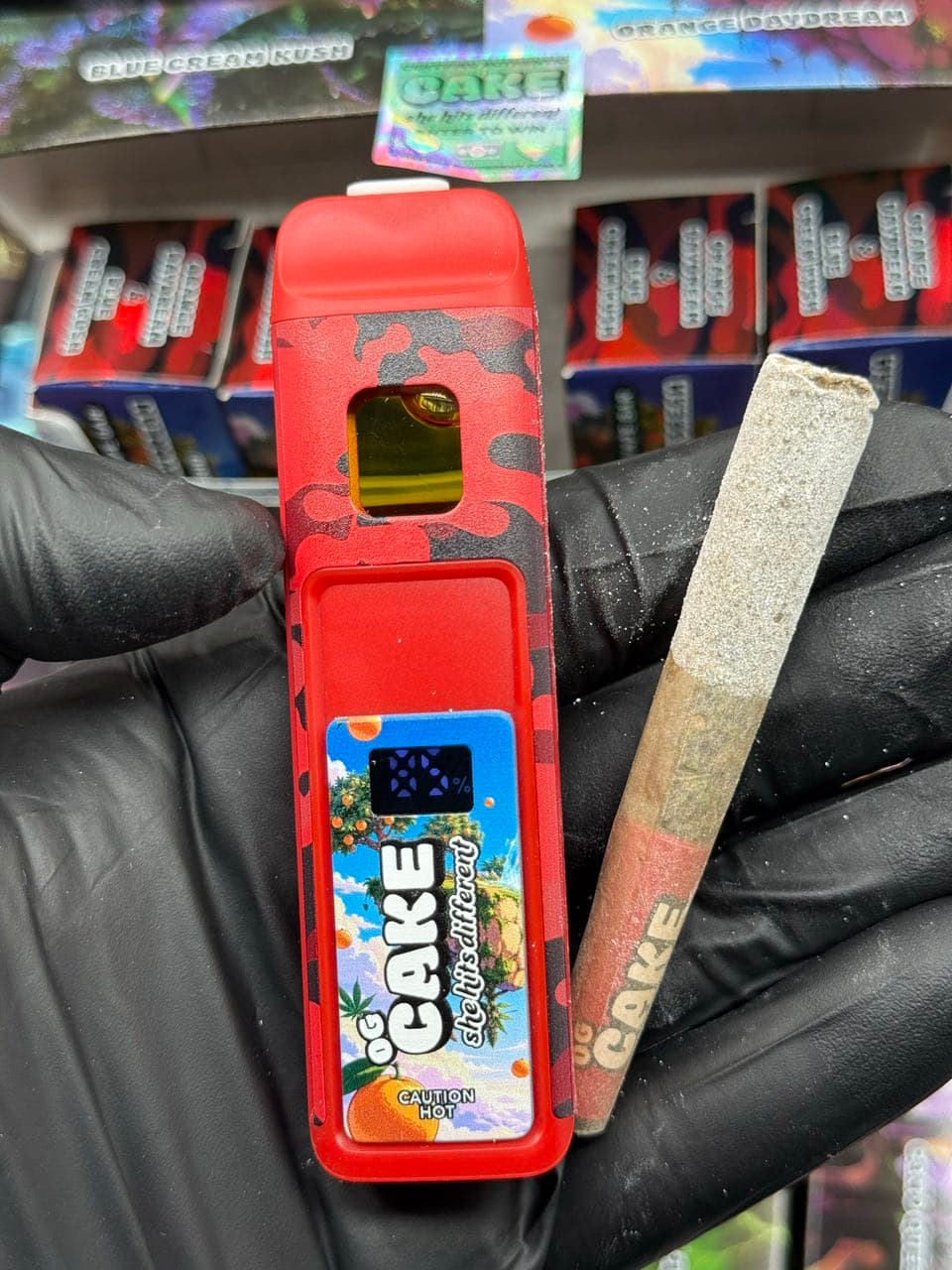
The OG Cake Red Camo 2G Disposable carries a distinctive name that combines a recognisable product identity with a camouflage-inspired visual theme. Its Red Camo designation suggests a design direction built around bold colour, patterned details, and an appearance that stands apart from more understated disposable-device styles. The product name also references a two-gram format, placing it within a category of compact electronic devices associated with cannabis concentrate products.
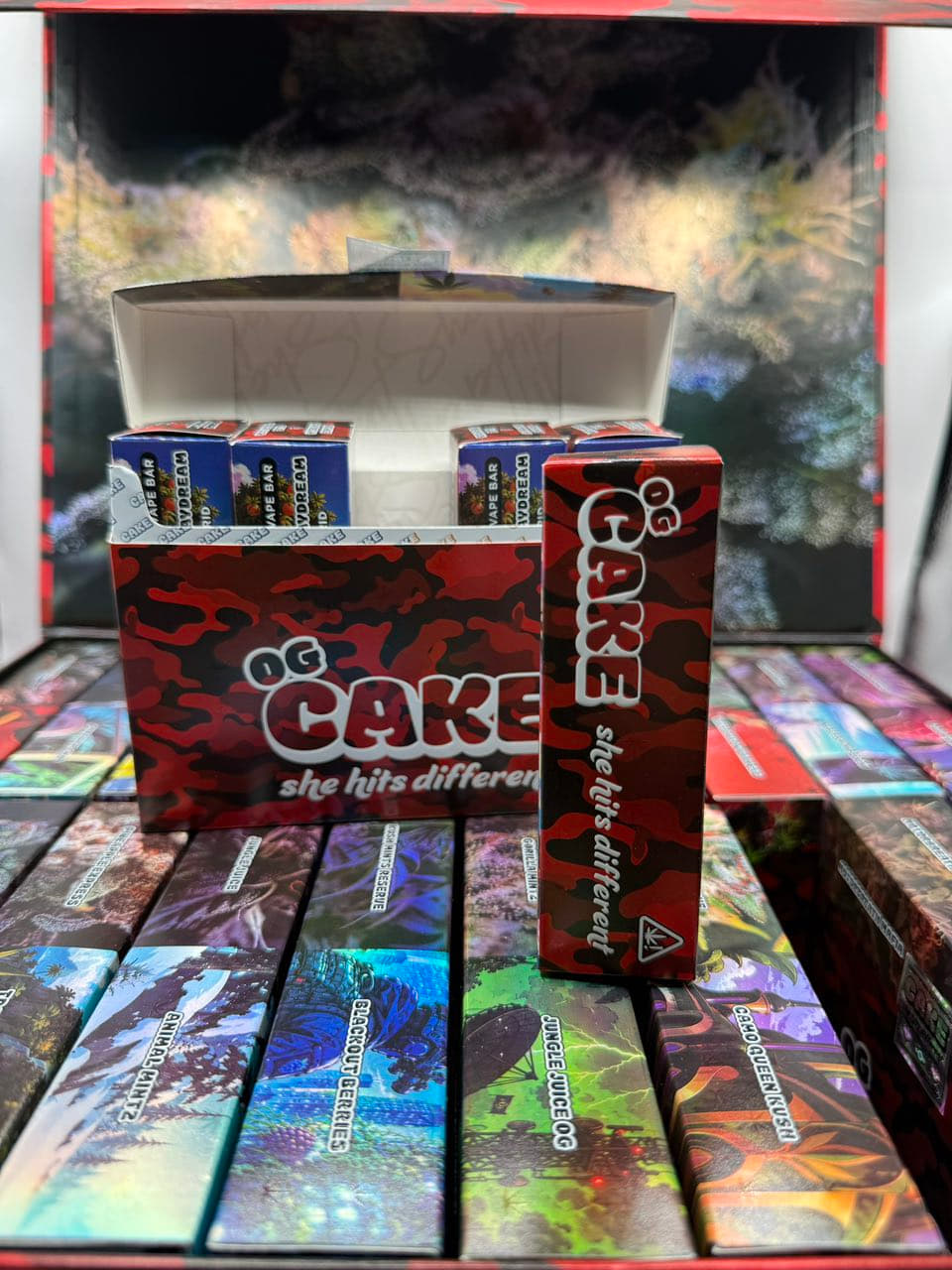
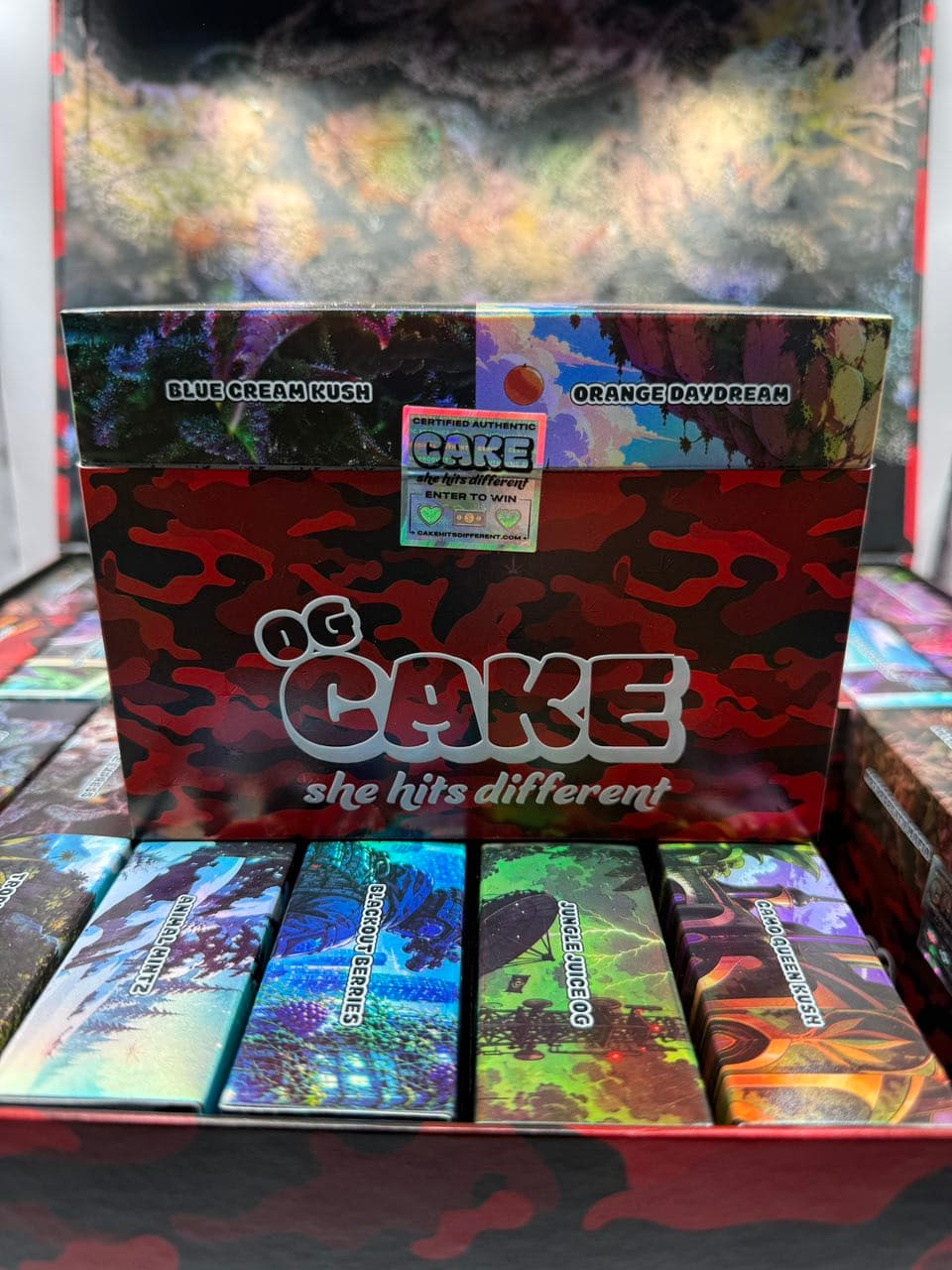
Product presentation often plays an important role in how an item is recognised. In this case, the Red Camo theme provides a defining visual identity, while the OG Cake name serves as the central branding element. Together, these details establish a product identity that is visually expressive and easy to distinguish in a catalogue.
Nevertheless, appearance and branding alone do not establish the quality, contents, authenticity, or performance of a product. Those details require reliable manufacturer information, appropriate labelling, and independent verification where available.
The Red Camo Design Identity

Colour is one of the most immediate elements of product recognition. The Red Camo theme combines the visual association of camouflage patterns with a stronger red-centred palette. Traditional camouflage often emphasises earthy colours and natural surroundings. Red-themed variations, however, create a more noticeable contrast and give the design a different character.
This contrast can influence how packaging is perceived. A patterned exterior may appear visually complex compared with a simple solid-colour design. Moreover, repeated shapes and contrasting shades can create a recognisable presentation without requiring excessive decorative elements.
The Red Camo name communicates a visual concept rather than a verified technical specification. The exact pattern, colour distribution, finish, and printed details may differ between packaging versions. Therefore, photographs and manufacturer-issued descriptions remain the most reliable sources for confirming the appearance of a particular item.
Understanding the Product Name
The product name contains several individual elements that help identify the item.
OG Cake
OG Cake is the branding element included in the product name. Brand names can help distinguish products within a broader category, although the presence of a brand name does not independently verify manufacturing origin or product authenticity.
Red Camo
Red Camo describes the design theme associated with the product. The name implies a camouflage-style pattern featuring red as a defining visual element. The precise colours and graphic arrangement require confirmation from actual packaging or official product images.
2G
The 2G designation generally refers to a stated two-gram quantity associated with the product. However, a printed quantity should not be treated as independent proof of contents or net weight. Accurate verification depends on appropriate labelling, manufacturer documentation, and applicable testing standards.
Disposable
‘Disposable’ describes a device category intended for limited-use operation rather than conventional long-term maintenance and component replacement. Disposable electronic products may contain batteries, electronic circuitry, plastics, and other materials that require appropriate handling after their useful life.
Product Category and General Characteristics
Disposable electronic devices vary considerably in construction, materials, and operating design. A product within this category may include a housing, electronic components, a battery, and an internal reservoir or other contained material, depending on its intended function and manufacturer specifications.
The compact form commonly associated with disposable products reflects a design approach in which multiple components occupy a relatively small enclosure. Consequently, the exterior may conceal internal elements that cannot be evaluated visually.
In addition, differences between production batches, labelling, and product versions can affect how an item is identified. A name appearing on a website may not necessarily correspond to every physical package carrying a similar design. Product documentation is therefore important when evaluating an item’s identity and stated characteristics.
Packaging and Product Presentation
Packaging serves several purposes beyond visual presentation. It may communicate the product name, manufacturer or distributor information, applicable warnings, ingredient or contents information, batch identification, and other details required by local regulations.
A camouflage-inspired presentation may use graphic elements to establish a consistent visual theme. Meanwhile, the written information on the packaging should provide a separate, factual source of identification.
Packaging details are particularly important for products containing regulated substances. Clear labelling can help distinguish verified information from branding language, assumptions, or unsupported online descriptions. Where documentation is absent, product characteristics should remain unconfirmed rather than presented as established facts.
Brand Identity and Visual Recognition
Brand identity is created through a combination of naming, design, typography, colours, packaging, and communication. These elements can establish a recognisable appearance across a catalogue, although recognition does not necessarily indicate product verification.
The OG Cake Red Camo name uses a combination of brand identification and descriptive design language. Its camouflage reference creates a visual distinction, while the red theme adds another layer to the naming structure.
Furthermore, consistent product naming can improve catalogue organisation. When a website uses the same name across its product title, image description, inventory record, and product-information page, readers can more easily distinguish one listing from another.
Product Identification and Authenticity
Product identification should rely on verifiable information rather than appearance alone. Similar names, colour schemes, and packaging designs may appear across different listings, so visual resemblance is not sufficient evidence of authenticity.
These details provide a more reliable foundation for product identification than descriptive branding alone.
Responsible Product Information
Accurate product information should distinguish between confirmed specifications, design descriptions, and claims that have not been independently verified. For example, a colour theme can be described based on visible packaging, whereas material composition, contents, concentration, battery performance, and manufacturing standards require appropriate evidence.
In addition, electronic disposable products raise environmental considerations because their components may include batteries and materials that should not be discarded with ordinary household waste in every jurisdiction. Disposal requirements vary, so local electronic-waste guidance remains relevant.
A Clearer Approach to Product Descriptions
A well-organised product-information page separates the product’s identity from assumptions about its characteristics. This approach allows a page to remain useful even when certain details are unavailable.
For OG Cake Red Camo 2G Disposable, the name and stated design theme provide the starting point for identification. Verified packaging information, documented specifications, and relevant safety information can then supply additional context.
Ultimately, clear descriptions are most useful when they prioritise accuracy, distinguish confirmed information from unverified claims, and present the product identity in a straightforward manner.
Understanding the Device’s Exterior Construction
The exterior construction of a compact disposable electronic device contributes to its overall identity, physical appearance, and handling characteristics. Although the outer shell may look relatively simple, its design can involve several materials and components arranged within a limited amount of space. The exterior also serves as the visible layer that separates internal electronics from everyday environmental exposure.
For the OG Cake Red Camo 2G Disposable, the Red Camo name establishes a distinctive design identity. However, the exact construction materials, surface finish, dimensions, and internal arrangement cannot be confirmed through the product name alone. These specifications should come from verified manufacturer documentation rather than assumptions based on similar products.
In general, disposable electronic products may use moulded plastic, metal elements, printed graphics, and small electronic assemblies. Furthermore, the surface finish can influence how the device looks under different lighting conditions. A matte finish, glossy finish, or patterned coating may each create a different visual impression, although the specific finish of this model remains unverified.
Packaging Details and Identification
Packaging is an important part of product identification because it may contain information that is not visible on the device itself. Printed labels can provide details about the responsible manufacturer, product designation, batch number, warnings, and other relevant information.
Moreover, packaging can help distinguish different product versions. When a product name remains similar across multiple editions, additional labelling details may be necessary to identify the specific variation. The colour theme alone is not always sufficient to confirm that two packages contain the same product.
A careful examination of packaging should focus on the accuracy and consistency of printed information. Missing labels, inconsistent product names, unclear manufacturing details, or unsupported claims may create uncertainty. Therefore, product identity should be evaluated through reliable documentation rather than graphic presentation alone.
Product Appearance and Visual Consistency
Visual consistency refers to the relationship between a product’s stated appearance and the physical item or images used to represent it. For an item identified by the Red Camo name, the visual theme is an important part of its catalog identity.
Color variations may appear differently in photographs because of lighting, display settings, camera processing, and image compression. As a result, online images do not always reproduce physical colors exactly. Similarly, a graphic pattern may appear sharper or more pronounced in promotional photography than it does on actual packaging.
For catalog purposes, accurate images and consistent product naming help prevent confusion. However, visual consistency should not be treated as proof of contents, quality, authenticity, or compliance.
Materials and Component Awareness
Electronic disposable products can contain multiple materials within a single enclosure. These materials may include plastics, metals, battery components, wiring, electronic circuit elements, and other manufactured parts. The precise composition varies according to the device and its manufacturer.
Because many components remain concealed, the exterior provides limited information about internal materials. In addition, products with similar appearances may have substantially different internal constructions. This makes manufacturer documentation and reliable technical information particularly important.
Material awareness also matters after the product reaches the end of its useful life. Batteries and electronic components may require separate disposal or collection procedures. Consequently, responsible handling includes awareness of local electronic-waste rules and restrictions.
Labeling and Information Accuracy
Clear labeling is essential for distinguishing factual product information from branding language. A product name, color designation, or quantity printed on packaging may identify how an item is presented, but it does not independently verify every characteristic.
A complete information record may include the product name, responsible business details, applicable warnings, batch identification, relevant testing documentation, and any required regulatory information. Furthermore, records should correspond to the specific product version being described.
When information is unavailable, the absence should be acknowledged instead of replaced with an assumption. This practice creates more reliable product records and reduces confusion between descriptive details and confirmed specifications.
Understanding Quality Claims
Quality claims can refer to several different subjects, including manufacturing consistency, packaging integrity, material selection, labeling accuracy, and compliance with applicable standards. These areas should be evaluated separately because evidence supporting one does not automatically establish another.
For example, packaging that appears professionally printed does not prove that the contents have been independently tested. Likewise, a familiar brand name does not necessarily establish the origin of an individual item.
Quality information is therefore most meaningful when it is supported by transparent documentation. Independent verification, appropriate testing, and clear manufacturing records offer a stronger basis for evaluating claims than appearance or naming alone.
Storage and Environmental Awareness
Storage conditions can influence the condition of electronic products and their packaging over time. Temperature changes, moisture, direct sunlight, physical pressure, and other environmental factors may affect materials or electronic components.
Nevertheless, storage requirements should be based on the manufacturer’s documented guidance. Different devices and contained materials may have different environmental limitations, so generalized assumptions may not be appropriate.
Environmental awareness also includes consideration of the surrounding conditions in which products are kept. Packaging integrity, exposure to moisture, and the presence of children or pets are important considerations for household safety. Products containing batteries or regulated substances should be kept and handled according to their applicable safety instructions.
Battery and Electronic-Waste Considerations
Disposable electronic devices may contain batteries that remain part of the product after its intended use has ended. Consequently, these products can present waste-management considerations that are different from ordinary packaging.
Electronic waste may contain materials that require specialized collection, recycling, or handling. Battery-containing devices should not automatically be treated as general household waste, because disposal rules differ by location and waste category.
Furthermore, damaged, swollen, leaking, unusually hot, or otherwise compromised electronic devices may present safety concerns. Such items should be handled cautiously and according to appropriate local guidance. The battery or electronic assembly should not be punctured, crushed, or dismantled casually.
Responsible Information for Adults
Cannabis-containing products are subject to age restrictions and legal requirements that vary between jurisdictions. These regulations may cover possession, distribution, product labeling, testing, and other aspects of the marketplace.
In addition, cannabis products can carry health risks, including impairment and other adverse effects. Product appearance and branding do not establish safety. Accurate information should therefore include appropriate warnings and avoid unsupported statements about effects, benefits, or suitability.
Responsible communication is based on transparency. Where legal restrictions apply, they should be acknowledged clearly. Where scientific or product-specific information is unavailable, uncertainty should remain visible rather than being replaced by confident claims.
Frequently Asked Questions
What does Red Camo mean in the product name?
Red Camo refers to the camouflage-inspired visual theme associated with the product name. The exact pattern and color arrangement should be confirmed through verified product images or packaging.
What does 2G mean?
The 2G designation generally represents a stated two-gram quantity. However, the exact meaning and accuracy of the printed quantity require product-specific labeling and verification.
Is the product’s exact construction publicly verified?
The name alone does not establish its construction. Reliable manufacturer specifications would be needed to confirm materials, dimensions, electronic components, and other technical details.
Does the packaging prove authenticity?
Packaging can provide identification details, but its appearance alone does not prove authenticity. Appropriate manufacturer records and verification information provide a stronger basis for assessing identity.
Why is labeling important?
Labeling helps communicate product identity, responsible-business information, warnings, batch details, and other relevant information. Clear labels can also help distinguish similar product versions.
What should happen to the device after use?
Disposable electronic products may contain batteries and other electronic materials. Their disposal should follow local electronic-waste and battery-collection guidance rather than automatically entering ordinary waste streams.
Can appearance confirm product contents?
No. Exterior appearance and branding cannot independently verify internal contents, composition, or product quality. Appropriate documentation and testing are necessary for those claims.
The OG Cake Red Camo 2G Disposable is identifiable by its product name and Red Camo design designation. Beyond those identifying elements, detailed claims about construction, materials, contents, and technical characteristics require reliable verification.
A useful product-information page keeps those distinctions clear. It provides readers with an organized understanding of product identification, packaging, materials awareness, labeling, and environmental considerations without confusing visual branding with confirmed specifications.
Accurate information, transparent documentation, and responsible handling remain the most meaningful foundations for understanding any disposable electronic product.
The Importance of Clear Product Identification
Product identification provides the foundation for understanding an item. A recognizable name helps distinguish one product from another, while additional information can establish its specific version, packaging, manufacturer, and other documented characteristics.
The OG Cake Red Camo 2G Disposable name combines a brand designation, a visual theme, and a quantity reference. Nevertheless, each part of a product name serves a different purpose. The brand identifies the naming identity, Red Camo describes the design concept, and 2G indicates a stated quantity that requires verification through appropriate labeling.
In online catalogs, these distinctions are especially important because product names can be repeated across different websites. Furthermore, images may be reused, modified, or supplied without complete documentation. A clear product record can help maintain consistency between the physical item, its packaging, and the information published online.
Product Naming and Catalog Organization
A consistent naming structure makes product catalogs easier to understand. When a product name includes several descriptive elements, organizing them in a predictable order can reduce confusion.
However, not every product listing contains all these details. Missing information should remain identified as unavailable rather than filled in with assumptions. In addition, naming consistency does not independently verify product authenticity.
Understanding Edition and Design Variations
Product editions may be identified by color names, graphic themes, packaging changes, or other descriptive distinctions. These names can help organize catalog records, although they may not indicate differences in internal construction or contents.
The Red Camo designation provides a visual identifier for the product listing. If different editions exist, their differences should be documented using reliable information. A color variation does not necessarily represent a different formulation, component arrangement, or manufacturing process.
Consequently, edition names are best treated as identification labels until verified specifications establish further distinctions.
Packaging Information and Documentation
Packaging information can provide important context that is not available from a product name. Depending on the product and jurisdiction, relevant details may include responsible-business information, manufacturing or batch identifiers, warnings, testing records, and required regulatory statements.
Clear documentation helps distinguish a factual product record from a description based entirely on appearance. Moreover, records that correspond to the exact product version provide more useful information than general statements about a broader product family.
When a product listing lacks supporting documents, its unverified characteristics should not be presented as established facts. This distinction is particularly important for products containing regulated substances or electronic components.
Manufacturing Information and Verification
Manufacturing information can help explain where an item originated and which entity is responsible for its production or distribution. However, manufacturing claims require appropriate supporting evidence.
A brand name printed on an item does not independently establish the manufacturing facility, production standards, or supply-chain history. Similarly, a package that resembles another verified product cannot establish that the contents or origin are identical.
Reliable verification may involve documentation from an identifiable manufacturer, appropriate testing records, batch-specific information, and relevant regulatory records. The availability and validity of these documents depend on the particular product and its market.
Product Photography and Digital Representation
Product photographs are frequently used to identify items within digital catalogs. Although photographs provide a visual reference, their accuracy depends on how they were created and whether they represent the actual product version.
Lighting, camera angles, image editing, display settings, and compression can alter the appearance of colors and details. Therefore, online images may not accurately reproduce the physical appearance of a package.
A product-information record should ideally distinguish between an actual product photograph, a generic illustration, and a digitally created representation. This distinction can reduce misunderstandings about product appearance and documentation.
Materials Awareness
Disposable electronic products may contain a combination of materials that serve different purposes. Depending on their construction, these may include plastics, metals, battery assemblies, electronic circuitry, and other components.
The presence of multiple materials creates practical considerations for handling and disposal. Some components may require specialized collection, while others may be subject to local electronic-waste rules.
Furthermore, the precise materials used in a particular product cannot reliably be established through its exterior appearance. Product-specific documentation remains necessary for accurate material identification.
Electronic Waste and Environmental Responsibility
Electronic waste is an important consideration for products that contain batteries or electronic assemblies. Unlike many ordinary packaging materials, these components may require dedicated collection or recycling procedures.
Improper disposal can create environmental concerns, especially where batteries or electronic components enter waste streams that are not designed to manage them.
Responsible waste management involves following local guidance, using designated collection facilities where available, and avoiding casual dismantling of electronic assemblies. In addition, damaged battery-containing products may require special handling because their condition can create additional hazards.
Labeling and Transparency
Transparency is an important element of reliable product information. A description should clearly separate visible details from documented specifications and unsupported claims.
For example, the Red Camo designation can describe the product’s named visual theme. However, statements about exact materials, internal composition, manufacturing quality, or technical performance require evidence.
This distinction helps prevent inaccurate information from becoming repeated across online catalogs. It also makes the product record easier to maintain when verified information becomes available.
General Safety Awareness
Products containing cannabis and electronic components can involve several separate safety considerations. Cannabis-related risks may include impairment and adverse reactions, while electronic devices may introduce battery-related hazards.
These concerns should not be treated as interchangeable. A product’s branding, exterior design, or stated quantity does not establish its safety or suitability.
Accurate safety information should rely on appropriate documentation and relevant public-health guidance. Where product-specific information cannot be verified, it is important to avoid making unsupported assurances.
Consumer Information and Legal Awareness
Cannabis laws vary by country and jurisdiction. Requirements may concern legal age, possession, distribution, labeling, testing, and other regulated activities.
Because these rules can change, product information should not assume that the same requirements apply everywhere. Readers should refer to the laws and regulations relevant to their location.
Responsible informational content also avoids presenting unverified legal statements as universal rules. A clear distinction between general information and jurisdiction-specific requirements helps preserve accuracy.
The OG Cake Red Camo 2G Disposable can be identified through its product name and visual designation. However, the name alone does not verify its manufacturing origin, contents, composition, technical specifications, or quality.
A reliable information page should maintain clear identification, accurate documentation, transparent labeling, and responsible environmental information. These elements create a stronger foundation for understanding a product than unsupported claims or descriptions based solely on its visual identity.
Product information is most useful when it remains factual, organized, and transparent about what is known and what still requires verification.


Reviews
There are no reviews yet.